
ACM2012-900-2P-T002

TDK
810-ACM20129002PT002
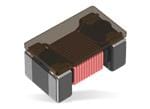
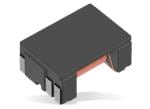
ACM2012-900-2P-T002

Nsx:

Mô tả:
Common Mode Chokes / Filters 90ohms

Tuổi thọ:
NRND:
Không khuyến khích cho thiết kế mới.
Mô hình ECAD:
Tải xuống Thư viện Tải miễn phí để chuyển đổi tệp tin này cho Công cụ ECAD của bạn. Tìm hiểu thêm về Mô hình ECAD.

Có hàng: 75,121

Tồn kho:
75,121
Có thể Giao hàng Ngay
Đang đặt hàng:
83,685
Thời gian sản xuất của nhà máy:
52
Tuần Thời gian sản xuất tại nhà máy dự kiến để có số lượng lớn hơn mức hiển thị.
Tối thiểu: 1   Nhiều: 1
Đơn giá:
$-.--
Thành tiền:
$-.--
Dự kiến Thuế quan:
Đóng gói:
Toàn bộ Cuộn (Đơn hàng theo bội số của 2000)

Giá (USD)

Số lượng Đơn giá
Thành tiền
Cut Tape / MouseReel™
$0.33 $0.33
$0.269 $2.69
$0.235 $5.88
$0.222 $22.20
$0.205 $51.25
$0.194 $97.00
$0.179 $179.00
Toàn bộ Cuộn (Đơn hàng theo bội số của 2000)
$0.165 $330.00
$0.16 $640.00
† $7.00 Phí MouserReel™ sẽ được thêm và tính vào giỏ hàng của bạn. Không thể hủy và gửi trả tất cả đơn hàng MouseReel™.

Đặc tính Sản phẩm Thuộc tính giá trị Chọn thuộc tính
TDK
Danh mục Sản phẩm: Cuộn cản / bộ lọc chế độ thông thường
RoHS:  
ACM
PCB Mount
SMD/SMT
2 Channel
200 nH
90 Ohms
400 mA
190 mOhms
- 40 C
+ 105 C
0805 (2012 metric)
2 mm
1.2 mm
1.3 mm
Reel
Cut Tape
MouseReel
Common Mode Filters
Signal Line
Nhãn hiệu: TDK
Quốc gia Hội nghị: Not Available
Quốc gia phân phối: Not Available
Quốc gia xuất xứ: JP
Loại sản phẩm: Common Mode Chokes
Số lượng Kiện Gốc: 2000
Danh mục phụ: Inductors, Chokes & Coils
Tần số kiểm tra: 100 MHz
Mã Bí danh: ACM2012-900-2P-T002 ACM2012E-670-2P-T00
Đơn vị Khối lượng: 5.500 mg
Đã tìm thấy các sản phẩm:
Để hiển thị sản phẩm tương tự, hãy chọn ít nhất một ô
Chọn ít nhất một hộp kiểm ở trên để hiển thị các sản phẩm tương tự trong danh mục này.
Các thuộc tính đã chọn: 0

CNHTS:
8504500000
CAHTS:
8548000000
USHTS:
8548000000
JPHTS:
854800000
KRHTS:
8504509090
TARIC:
8548909099
MXHTS:
8504509102
BRHTS:
85045000
ECCN:
EAR99

ACM2012E Common Mode Filters

TDK ACM2012E Common Mode Filters are small, with a low profile, making them ideal for height-restricted applications. The impedance for common mode noise can clear 1000Ω at 100MHz, providing excellent EMC suppression. Differential mode impedance is suppressed so there is virtually no effect on high speed signals. TDK ACM2012E Common Mode Filters are ideal for use in applications such as USB2.0 / USB 3.0, Ethernet, HDMI lines for PCs and set-top boxes (STBs), LCD panel LVDS, and Panel Link lines.

Modbus Products

TDK Corporation offers a wide range of EPCOS and TDK brand components ideal for the design and development of Modbus circuits. Modbus is the standard serial communication protocol used throughout many industries to transmit and collect data from one electronic device to another. The Modbus protocol is commonly used in the design of the Industrial Internet of Things (IIoT). TDK components for Modbus-related applications feature a wide range of general passive devices such as signal inductors, common-mode filters, signal transformers, inductors, chokes, aluminum electrolytic capacitors, SMD varistors, and surge arresters. A full range of sensors and sensor systems are available for specific Modbus sensor requirements.

ACM Common Mode Filters

TDK ACM Common Mode Filters feature excellent common mode impedance and noise suppression in a compact case. The low profile and small size make these TDK common mode filters optimal for surface mounting. ACM series devices are designed as a power line noise countermeasure for electronic equipment. The product line now includes ACM-E Common Mode Filters for high-speed differential signal line and general signal line uses. ACM-E devices are downsized, low height wound type chip common mode filters that maintain required common mode filter characteristics.

Standard Inductors

TDK Corporation offers a comprehensive line of EPCOS inductors, including power inductors, SMT inductors, leaded inductors, helically wound chokes, and transponder coils. These inductors are suitable for a broad variety of applications to ensure electromagnetic compatibility, including low- and high-frequency decoupling of signal and control circuits as well as filtering of power supplies. These components can also be found in resonant circuits, impedance matching, and energy storage applications.

PoE - Power over Ethernet Applications & Solutions

TDK PoE - Power over Ethernet Applications and Solutions feature TDK's expanded line of ALT series SMD pulse transformers to be used in combination with ACM and MCZ series common-mode filters. These are used in various PoE applications that are compatible with 1G/2.5G/5G/10GBASE-T, 10/100/1000BASE-T, and PoE+ (600mA) standards. PoE is a technology that allows electrical power and data transmission to be carried simultaneously through a single cable versus through a separate power cord and network cable. PoE reduces the number of cables and wires necessary for installation and allows for design flexibility, as device placement no longer relies on the availability of an electrical outlet. PoE is capable of supporting higher transmission speeds while still providing outstanding reliability and meeting compact design targets. TDK PoE - Power over Ethernet Applications and Solutions allow for greater scalability as the number of connected devices and LAN interfaces on each device continues to grow and more electronic components are used in servers and routers, as well as in other network and communication devices. 

WE-CMB Common Mode Power Line Inductors (Chokes)

Würth Elektronik WE-CMB Common Mode Power Line Inductors (Chokes) feature a compact design that delivers high suppression of asymmetric interferences, even at low-frequency ranges. In addition, these inductors provide broadband screening due to a low capacitance winding technique. Würth Elektronik WE-CMB Common Mode, Power Line Inductors, are ideal for power electronics and suppressing common-mode noises. Parasitics can have a significant effect on the noise attenuation and current rating of a common mode filter. Würth designed the WE-CMB series for minimal parasitic effects over its useful frequency bandwidth so it does what it is designed to do - get rid of the noise.